Commercial Waste in Berkhamsted

Commercial waste in Berkhamsted needs a service that is organised, practical and clear about what can be collected. We handle business waste removal for premises that produce mixed everyday rubbish, recyclable materials and bulkier items that need careful handling. The focus is on making disposal straightforward for offices, shops, workshops and other commercial spaces, with a service shaped around proper sorting, responsible transfer and steady collection planning.
For many businesses, waste builds up in more than one form. Paper, packaging, broken fixtures, outdated furniture and general refuse may all need to leave the site in different ways. Our approach is to deal with the load in a way that keeps the process manageable for the customer while supporting safe clearance and sensible disposal choices. If you need a quotation, you can begin with a simple enquiry.
Different businesses also need different timing. Some want one-off help after an office move, refurbishment or stock change; others need a repeated arrangement that keeps waste from interrupting day-to-day work. We can support both styles of request with a service built around the practical reality of business premises. Tell us what needs removing, and we can help shape a suitable next step.
Business waste collection for working premises
Our business waste removal service covers the sort of material that accumulates in premises open to staff, customers or suppliers. That can include sacks of general waste, boxed packaging, paper-heavy office material, broken fittings and unwanted items left after a change in layout. The work is planned so that the collection itself is straightforward and the removal process does not become an interruption to the wider running of the business.
Because commercial sites vary so much, the best way to organise a collection is to describe the waste as accurately as possible. A useful enquiry usually covers the type of material, rough quantity, ease of access and whether the items are loose, bagged or bulky. A clear description helps make the quotation more reliable and helps us plan the right method. If it is easier, a short list of the main items is often enough to begin.
Office clearances and equipment removal
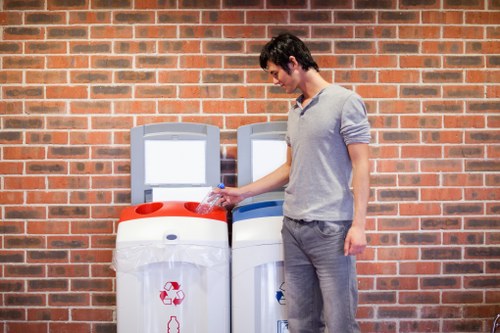
Office waste often needs more than a basic bag collection. Desks, chairs, filing units, shelves, monitors, printers and other redundant items may need to be lifted out of circulation and removed carefully. We can assist with office clearance work that deals with mixed contents in a structured way, allowing usable spaces to be returned to normal function without leaving unwanted furniture or equipment behind.
Where an office is being reconfigured or emptied, the task can involve both light and bulky material. Loose paper waste and packaging are usually straightforward, while larger items may require more thought about access routes, shared corridors or loading points. It helps to separate what stays from what goes before the removal begins. That keeps the work focused and reduces the chance of confusion during the collection.
Some customers also want to deal with confidential paperwork at the same time as general office waste. When that is part of the job, the collection should be planned so that sensitive material is handled appropriately and mixed waste streams do not become muddled. For a fuller view of this option, see our confidential shredding page, which covers the disposal of sensitive business documents alongside other office-related tasks.
Warehouse, shop and trade waste
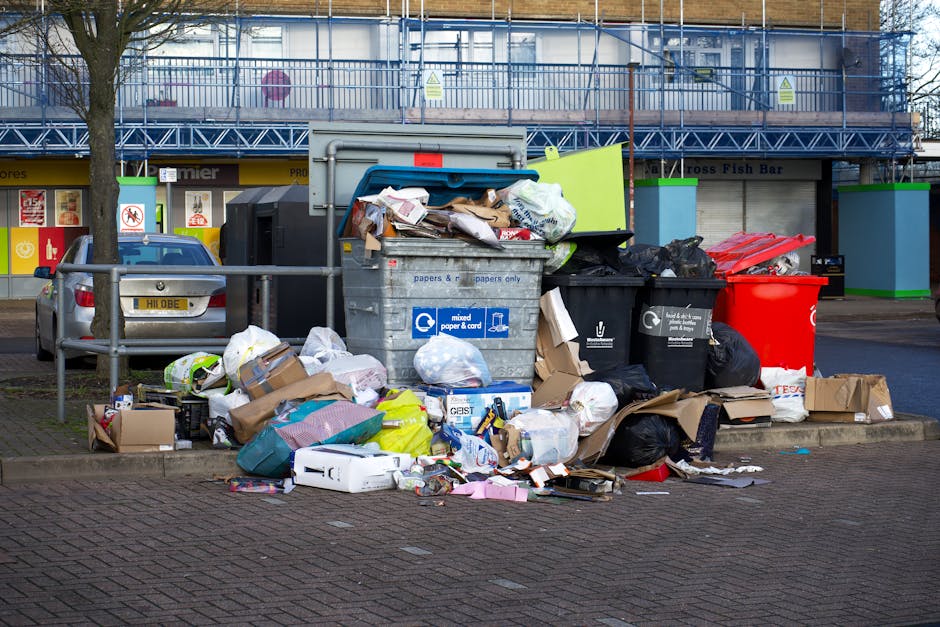
Commercial premises often produce waste that is less uniform than domestic rubbish. Shops may have broken display fittings, damaged packaging and unwanted stock containers; warehouses may generate wrapping, pallets or general operational waste; trade premises can have offcuts, scrap packaging and mixed debris from routine activity. The service is designed to accommodate that variety and to remove items in a way that suits the site layout and the type of material involved.
Where loads are mixed, sorting matters. Recyclable material should not be left tangled with general waste if it can be separated, and bulky items should be identified early so the collection can be planned around them. If the waste includes heavier pieces or awkward shapes, access becomes important too, especially where corridors, stairs or loading bays are involved. Our aim is to make the process orderly rather than rushed.
- general commercial refuse
- office furniture and fixtures
- packaging, cartons and wrapping
- bulky items needing extra handling
Recycling, sorting and responsible disposal
Commercial waste should not be treated as one single material if there is a sensible way to divide it. Cardboard, paper, metals, plastics and certain electrical items may each need a different route depending on what has been collected. The service is built around this practical reality, with an emphasis on sorting waste into the most suitable stream available rather than simply treating every item in the same way.
For many businesses, responsible disposal is about consistency as much as anything else. A collection plan that pays attention to the type of waste, the proportions in the load and any special handling requirements is easier to manage over time. Our recycling and sustainability approach is described in more detail on the recycling and sustainability page, which explains the broader handling of recovered materials and disposal choices.
Furniture disposal for commercial spaces
When business premises are refreshed, reorganised or vacated, furniture is often one of the largest parts of the waste load. Office desks, chairs, cupboards, shelving, meeting tables and reception furniture can all need removing in a controlled way. Our furniture disposal service is intended for those situations where items are no longer needed but still have to be cleared safely and sensibly from the premises.
Furniture removal can involve more than just lifting pieces out of a room. Size, weight, access and condition all affect how the job is handled. Flat-packed items and lightweight chairs may be easy to move, while larger cabinets or damaged desks may need additional care. If you already know the items involved, it helps to mention whether they are dismantled or still assembled. That gives a better basis for planning the work.
Where a broader business clearance is needed, furniture may be only one part of the task. If the load includes other domestic-style items from staff areas or commercial accommodation, the related flat clearance and office clearance pages show the different types of clearance we can organise around furniture-heavy jobs.
Hazard-aware handling and specialist items
Some commercial waste streams cannot be treated as ordinary rubbish because they need extra care or a specific disposal route. Items such as appliances, certain containers, and potentially hazardous material should always be identified before collection. We can deal with waste removal where the load includes specialist pieces, but the important point is that the material must be described accurately so it can be handled in line with the relevant requirements.
Not every awkward item is hazardous, but not every item is simple either. Fridges, for example, may need to be separated from general furniture or packaging, while other items can contain components that should not go into routine waste. For more information on the specialist side of this work, the fridge and appliance removal page and the hazardous waste disposal page set out those categories more clearly.
How to prepare a useful quotation request

Two things make a quotation easier to prepare: the type of waste and the conditions on site. If you can say what is to be removed, roughly how much there is and whether it is already gathered in one place, that usually gives enough detail to start. It also helps to mention access matters such as stairs, shared corridors, restricted parking or loading restrictions, because these can affect the method and the time needed for the collection.
Photographs can be helpful where the waste is mixed, bulky or difficult to describe. A short message with a few pictures, a list of the main items and any timing requirements gives a much clearer picture than a vague request. If you want to check current guidance on pricing factors before sending details, our pricing and quotes page gives a useful overview of the information that typically supports a quotation.
If the waste includes confidential papers, heavy furniture or specialist items, it is best to mention those separately rather than leaving them buried in a general description. That allows the enquiry to be assessed against the right type of work from the start. Clear information at this stage usually leads to a more accurate response and a smoother collection.
Clearance after changes, moves and refurbishments
Business waste is often created at specific points in a building’s life: after a move, following a refit, during a stock change or at the end of an office or shop rearrangement. In those situations, waste can include a mixture of loose rubbish, discarded fittings, dismantled furniture and packaging from new equipment or stock. Our clearance service is geared towards those one-off bursts of material that need to be removed efficiently.
Some jobs are small and focused, while others involve several categories of material that need to be tackled in a sensible order. The important thing is to identify what is going out, what remains on site and whether the clearance needs to happen in stages. If you are planning a wider property clean-out, our house clearance and home clearance pages show how different clearance styles are structured, even when the final setting is commercial rather than domestic.
About Berkhamsted
Berkhamsted is a historic market town in Hertfordshire, set in the Bulbourne valley where the River Bulbourne and the Grand Union Canal run through the landscape. The town grew up around an important crossing point and later developed as a settlement with strong links to transport, trade and local estates. One of its best-known landmarks is Berkhamsted Castle, a Norman motte-and-bailey fortress associated with the early medieval period; its earthworks remain a distinctive feature of the town and are managed as an important heritage site. The High Street reflects a long commercial history, with a linear form that follows the valley and includes a mixture of period buildings, independent shops and civic premises. Near the centre, St Peter’s Church stands as another notable historic structure, while the surrounding streets contain examples of timber-framed, Georgian and later Victorian architecture that show how the settlement changed over time. The canal corridor adds a separate layer to the town’s character, with waterside paths, bridges and industrial history connected to navigation and local trade. To the south and west, open spaces and nearby hillside scenery lead into the Chiltern landscape, giving the town a mix of built and natural settings. Berkhamsted also has a cultural life shaped by its schools, library, theatre and community organisations, which support a busy local identity beyond its historical core. Together, these features make it a town where heritage, everyday life and a well-used centre remain closely connected.
Regular collection planning for ongoing waste
Some businesses need more than a one-off clearance. If waste appears regularly, it helps to think about how it is presented, where it is stored and how easy it is to collect without affecting staff or customers. Ongoing arrangements are usually easier to manage when materials are kept separate from general clutter and when the typical volume is understood in advance. That makes each collection more predictable and reduces unnecessary handling.
We can support business waste removal where the pattern is repeated, seasonal or tied to specific operational changes. In practice, that may mean dealing with the same kind of waste each time, or it may mean a changing load depending on what the business has been doing that week. If you are comparing different clearance routes, the waste removal page offers a broader overview of the general service, while the business waste removal page focuses on commercial requirements.
When the waste includes a mixture of items, a short note about the order in which things need to be removed is helpful. For example, some premises need a clearance around trading hours, while others need the collection to follow a fit-out sequence or a handover plan. Whatever the context, the aim is the same: to remove unwanted material neatly and with as little disruption as possible. Request a quotation when you are ready.
Other clearance options that may suit your load
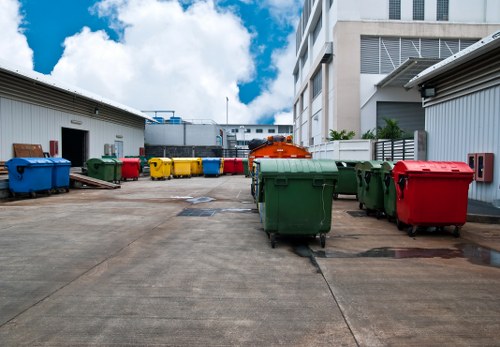
Not every commercial job is identical, so related clearance types can be useful where a load has a particular shape. A garage, loft or furniture-heavy space may need a different approach from a standard office clear-out, especially if the contents are mixed or awkwardly stacked. Where it is relevant, our related pages help explain the structure of those services and make it easier to match the right clearance to the right job.
For example, builders’ waste and garden material are handled differently from general commercial rubbish, and household-style clearances have their own practical shape too. If your premises include storage areas, outbuildings or a mix of domestic and business items, the relevant pages can help you identify the best fit: builders waste clearance, garden clearance, garage clearance, loft clearance and furniture clearance.
For a straightforward next step, send through a brief description of the waste, the location of the items and any access points we should know about. If the job is ready to price, use the contact route that suits you best and ask for a quotation.